
Give us a call at (570) 784-6440 or book a consultation online to discuss your pet’s upcoming surgical procedure.
What Happens Before My Cat or Dog’s Surgery?
Every surgical procedure requiring general anesthesia begins with a pre-surgical physical examination and blood screening. These steps help us look for health concerns that could affect anesthesia or require us to adjust the surgical plan. We also provide pain medication before the procedure so pain management begins before surgery starts.
Before your pet’s surgical day, we’ll give you instructions about feeding, arrival time, medications, and anything else you need to know. If something is unclear, ask. We would rather answer one more question than have you head home wondering.
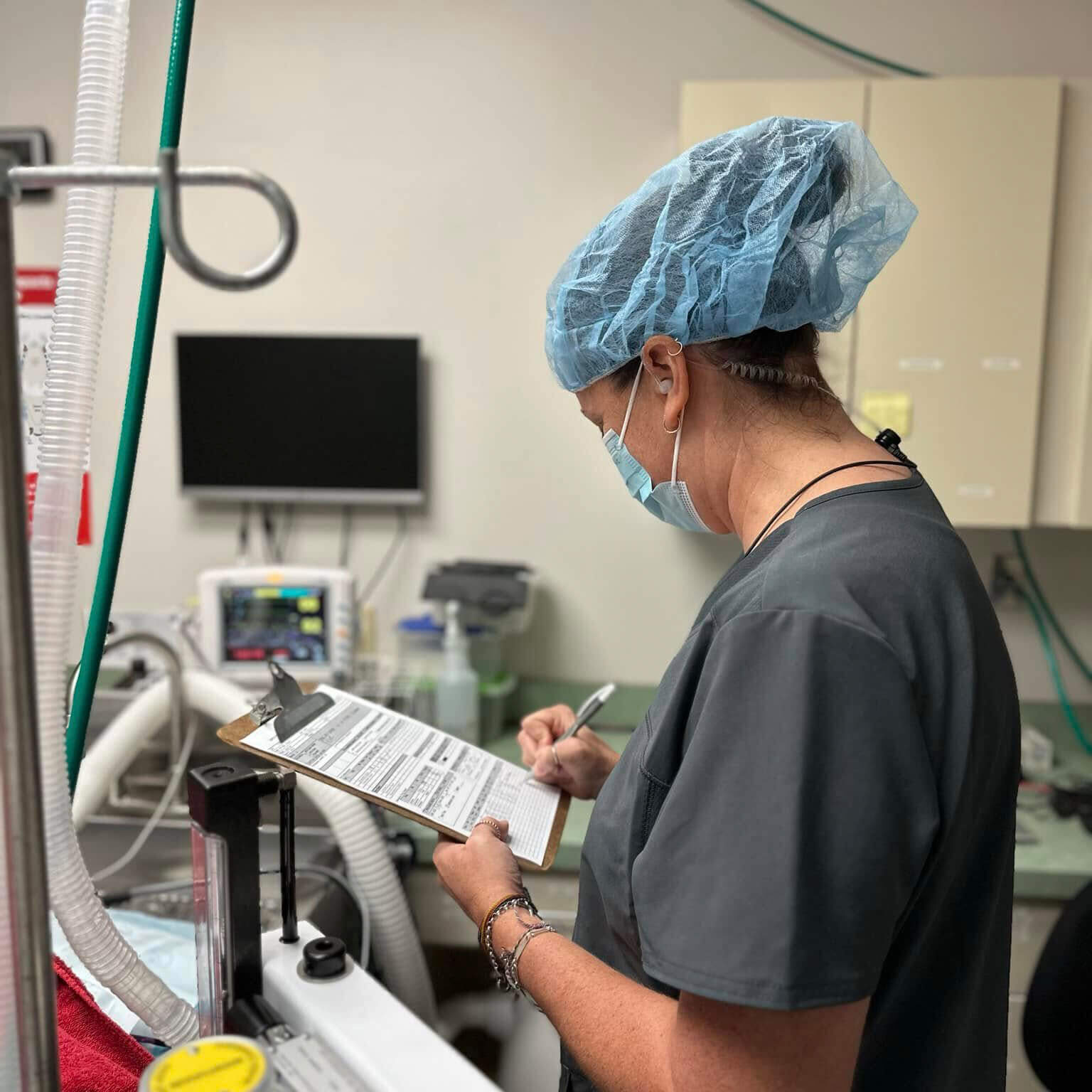
How Do We Keep Pets Safe Under General Anesthesia?
We follow a consistent anesthetic protocol and monitor your pet carefully before, during, and after surgery. Before anesthesia, we perform a physical exam and review bloodwork to look for health concerns that could affect the procedure or require changes to the anesthetic plan.
While your pet is under anesthesia, a veterinarian and veterinary technician closely monitor:
-
Respiration
How effectively your pet is breathing
-
Oxygen level
How well oxygen is circulating through the body
-
Heart rate
How your pet’s cardiovascular system is responding
-
Blood pressure
Whether circulation remains stable
-
Body temperature
Since anesthesia can lower body temperature, we track it throughout the procedure
We also use heated surgical tables to help maintain your pet’s body temperature. Because no anesthetic procedure is entirely without risk, this combination of pre-surgical screening, consistent protocols, real-time monitoring, and temperature support helps us respond quickly to changes and keep your pet as safe and comfortable as we can.
How Do We Manage Pain During and After Surgery?
Pain management begins before surgery and continues through recovery because controlling discomfort is an important part of surgical care. Pets experience pain just as people do, but they may show it differently. Some become quiet or withdrawn. Others may pant, resist movement, lose interest in food, or simply seem unlike themselves.
We use a combination of pain medications and local anesthesia when appropriate to help reduce discomfort during and after the procedure. Your pet’s pain-control plan depends on the surgery being performed and their individual medical needs. If medications are needed at home, we’ll explain exactly how and when to give them.
What Should I Expect When My Pet Comes Home?
Your pet may be sleepy, quieter than usual, or mildly uncomfortable after surgery, and most procedures require some period of restricted activity while healing takes place.
Your discharge instructions will depend on the surgery performed, but we may ask you to:
- Keep activity calm and controlled
- Prevent running, jumping, or rough play
- Check the incision regularly
- Keep the surgical site clean and dry
- Prevent licking or chewing
- Give medications exactly as directed
Even when your pet starts acting like themselves again, the tissues beneath the skin are still healing. Following activity restrictions can help protect the surgical site while that process continues.
Questions about your cat or dog’s surgery? Give us a call at (570) 784-6440 or schedule a consultation online.